
How Chocolate Gets Chosen
Behind every chocolate purchase is a choreography of psychology, pricing and presentation
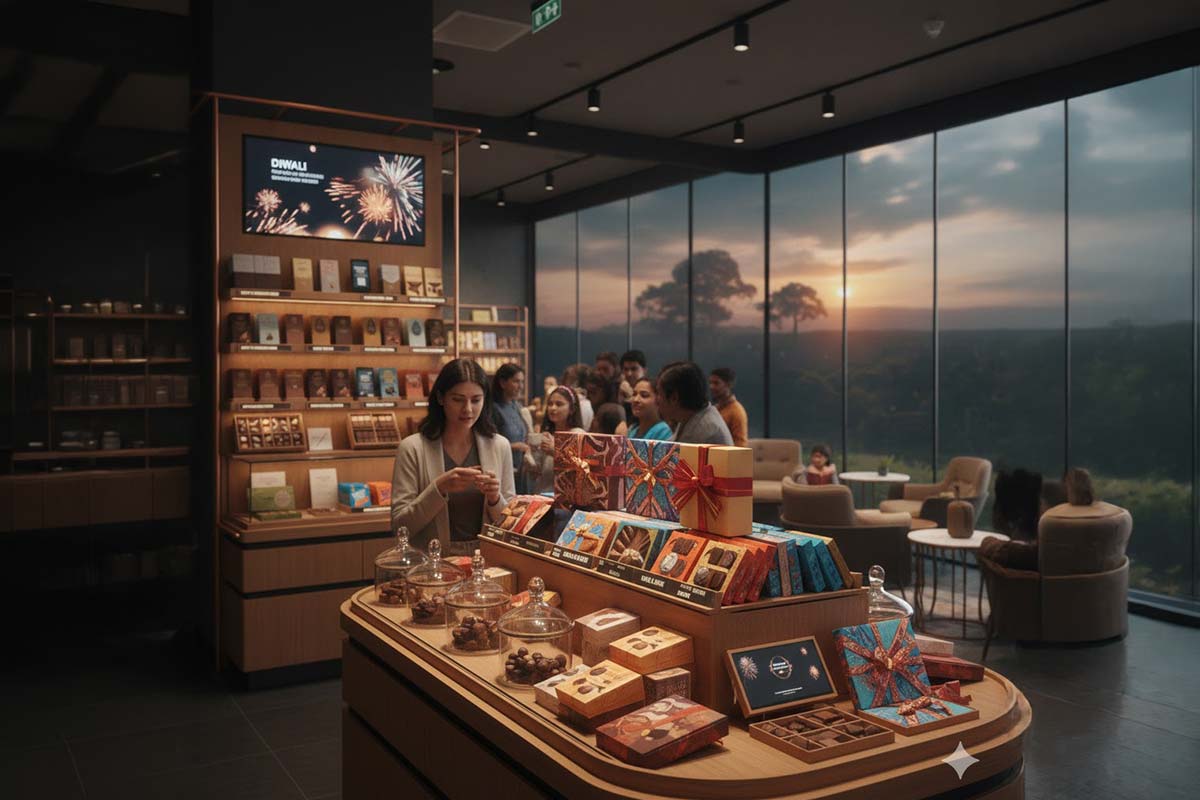
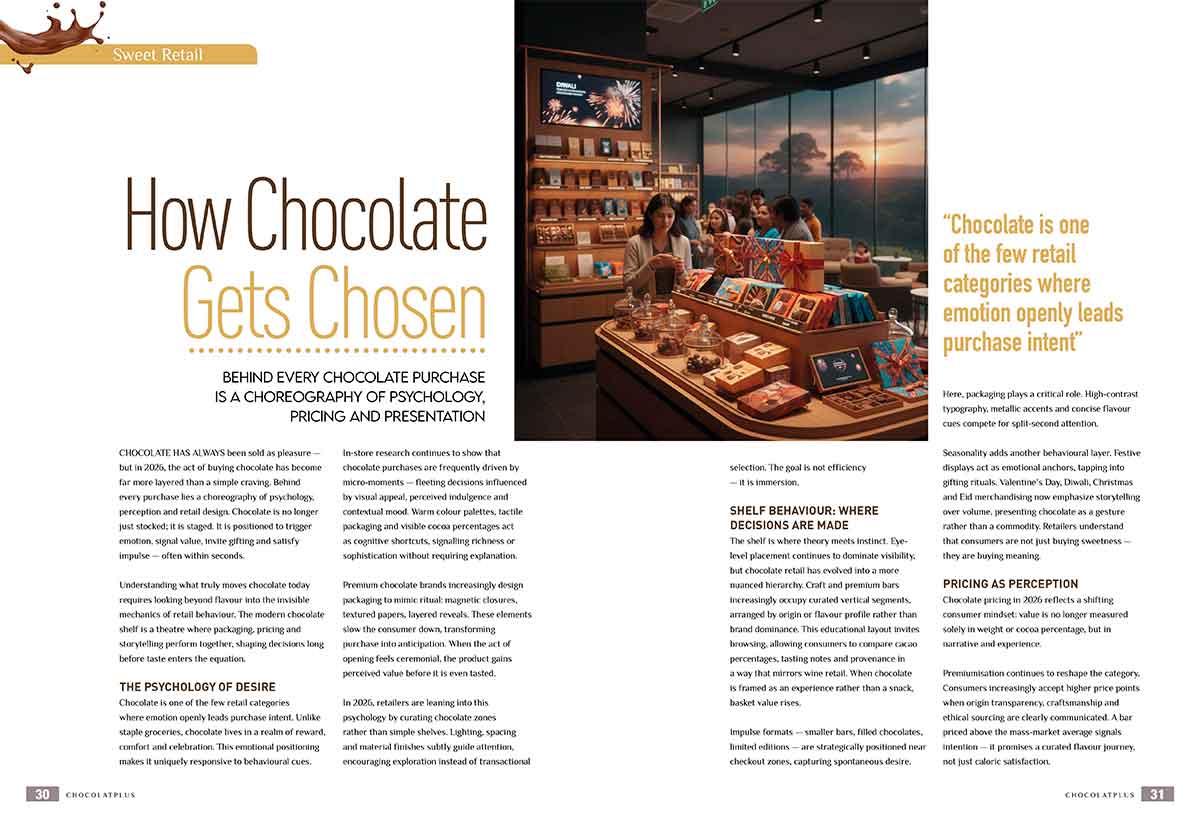
Chocolate has always been sold as pleasure — but in 2026, the act of buying chocolate has become far more layered than a simple craving. Behind every purchase lies a choreography of psychology, perception and retail design. Chocolate is no longer just stocked; it is staged. It is positioned to trigger emotion, signal value, invite gifting and satisfy impulse — often within seconds.
Understanding what truly moves chocolate today requires looking beyond flavour into the invisible mechanics of retail behaviour. The modern chocolate shelf is a theatre where packaging, pricing and storytelling perform together, shaping decisions long before taste enters the equation.
The psychology of desire
Chocolate is one of the few retail categories where emotion openly leads purchase intent. Unlike staple groceries, chocolate lives in a realm of reward, comfort and celebration. This emotional positioning makes it uniquely responsive to behavioural cues.
In-store research continues to show that chocolate purchases are frequently driven by micro-moments — fleeting decisions influenced by visual appeal, perceived indulgence and contextual mood. Warm colour palettes, tactile packaging and visible cocoa percentages act as cognitive shortcuts, signalling richness or sophistication without requiring explanation.
Premium chocolate brands increasingly design packaging to mimic ritual: magnetic closures, textured papers, layered reveals. These elements slow the consumer down, transforming purchase into anticipation. When the act of opening feels ceremonial, the product gains perceived value before it is even tasted.
In 2026, retailers are leaning into this psychology by curating chocolate zones rather than simple shelves. Lighting, spacing and material finishes subtly guide attention, encouraging exploration instead of transactional selection. The goal is not efficiency — it is immersion.
Shelf behaviour: where decisions are made
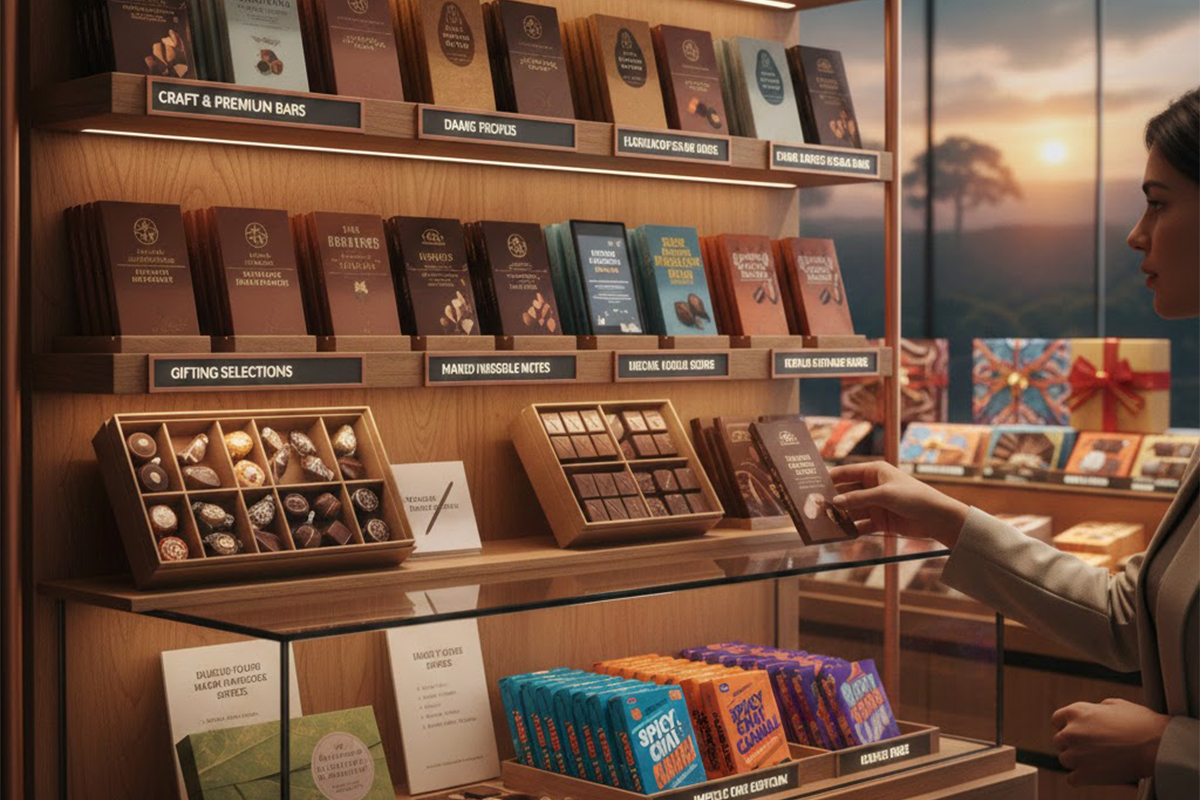
The shelf is where theory meets instinct. Eye-level placement continues to dominate visibility, but chocolate retail has evolved into a more nuanced hierarchy. Craft and premium bars increasingly occupy curated vertical segments, arranged by origin or flavour profile rather than brand dominance. This educational layout invites browsing, allowing consumers to compare cacao percentages, tasting notes and provenance in a way that mirrors wine retail. When chocolate is framed as an experience rather than a snack, basket value rises.
Impulse formats — smaller bars, filled chocolates, limited editions — are strategically positioned near checkout zones, capturing spontaneous desire. Here, packaging plays a critical role. High-contrast typography, metallic accents and concise flavour cues compete for split-second attention.
Seasonality adds another behavioural layer. Festive displays act as emotional anchors, tapping into gifting rituals. Valentine’s Day, Diwali, Christmas and Eid merchandising now emphasize storytelling over volume, presenting chocolate as a gesture rather than a commodity. Retailers understand that consumers are not just buying sweetness — they are buying meaning.
Pricing as perception
Chocolate pricing in 2026 reflects a shifting consumer mindset: value is no longer measured solely in weight or cocoa percentage, but in narrative and experience.
Premiumisation continues to reshape the category. Consumers increasingly accept higher price points when origin transparency, craftsmanship and ethical sourcing are clearly communicated. A bar priced above the mass-market average signals intention — it promises a curated flavour journey, not just caloric satisfaction.
Interestingly, mid-tier chocolate brands are adopting premium cues without alienating price-sensitive buyers. Limited editions, collaboration releases and storytelling-driven packaging allow brands to elevate perception while maintaining accessibility. The result is a layered pricing architecture that supports both everyday indulgence and aspirational gifting.
Retailers are also experimenting with tiered displays that visually separate chocolate by experience category: daily treat, gifting selection, connoisseur range. This segmentation reduces decision fatigue and helps consumers self-select based on occasion rather than budget alone.
The culture of gifting
Chocolate remains one of the world’s most universal gifts, but gifting behaviour is evolving. In 2026, presentation and personalisation matter as much as flavour.
Consumers increasingly seek chocolates that communicate thoughtfulness — origin stories, artisanal craftsmanship, locally made credentials. Packaging that accommodates handwritten notes or modular gift assemblies enhances emotional value. Retailers are responding with build-your-own chocolate boxes, pairing bars with tasting cards or complementary items like speciality teas.
Corporate gifting has also matured. Businesses now favor chocolates that reflect sustainability commitments and cultural relevance. Traceable sourcing, eco-conscious packaging and regionally inspired flavours allow chocolate to function as both gesture and statement.
Gifting transforms chocolate from product to message — and retailers who understand this dynamic design spaces that support storytelling, not just sales.
Digital influence and hybrid retail
Even in physical stores, digital culture shapes how chocolate is sold. Social media aesthetics influence packaging design, with brands prioritising visual distinctiveness that translates seamlessly from shelf to screen. A bar that photographs well extends its retail life into the digital word-of-mouth.
QR-enabled packaging bridges the physical-digital divide, offering access to tasting notes, farm stories and pairing suggestions. This added layer of engagement deepens perceived value and encourages repeat purchase. Hybrid retail models — pop-ups, experiential tastings, chocolate workshops — further blur the boundary between commerce and culture. Consumers are no longer passive buyers; they are participants in a narrative ecosystem.
Retail as storytelling
Ultimately, what moves chocolate is not just appetite — it is context. Chocolate thrives when retail environments frame it as experience, emotion and exploration. The most successful chocolate displays in 2026 do not overwhelm with choice; they curate with intention.
A thoughtfully arranged shelf communicates hierarchy, invites curiosity and reduces friction. A compelling price story reinforces trust. A gifting-friendly presentation transforms indulgence into connection.
Chocolate sells best when it feels purposeful.
In an era where consumers are increasingly conscious of origin, craftsmanship and meaning, the retail space becomes an extension of the chocolate’s story. Every design choice — from lighting to label copy — contributes to how that story is perceived.
Because in the end, chocolate is never just bought. It is chosen — guided by psychology, shaped by presentation and sealed by emotion. And when retail understands that choreography, sweetness moves effortlessly from shelf to hand.

