

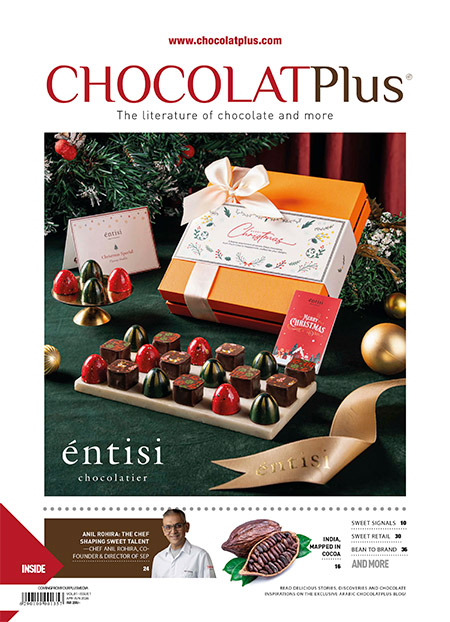
The Operator’s Guide to Building A Chocolate Line That Sells
Operators live on cash cycles, yields, and pack decisions
If you want to build a chocolate brand, the hardest part is not flavor. It’s throughput and trust. Flavor is necessary, but it doesn’t pay salaries by itself. What pays is getting repeatable quality through a small factory, turning it into packs that move, and keeping promises you made on the label. The first big decision is what you buy. People like to start with beans. It feels pure. But beans are a promise, not a product.
If you’re new, start with two inputs, not one: buy a consistent couverture for your best-selling SKUs, and buy select beans for a small, high-margin line. That split protects you from learning-curve losses. Coverature gives you reliability while you learn your plant. The small bean-to-bar line gives you story and upside.
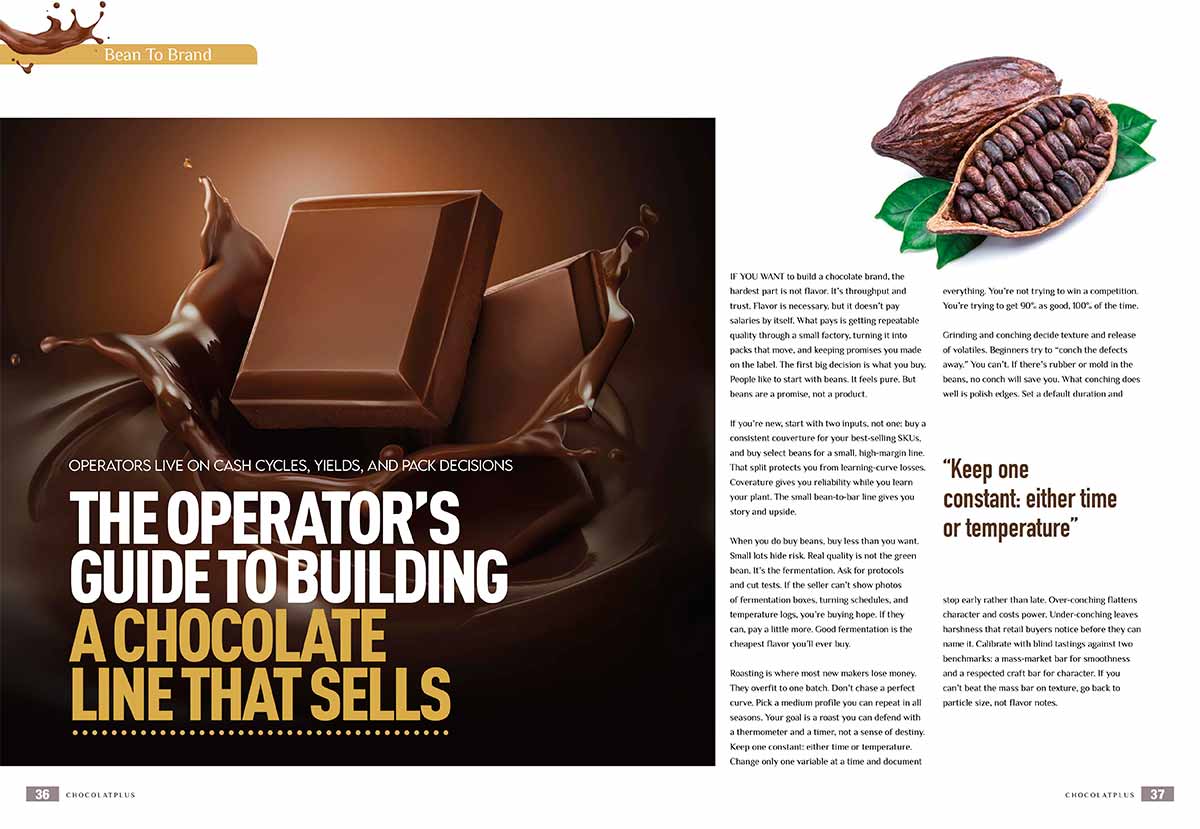
When you do buy beans, buy less than you want. Small lots hide risk. Real quality is not the green bean. It’s the fermentation. Ask for protocols and cut tests. If the seller can’t show photos of fermentation boxes, turning schedules, and temperature logs, you’re buying hope. If they can, pay a little more. Good fermentation is the cheapest flavor you’ll ever buy.
Roasting is where most new makers lose money. They overfit to one batch. Don’t chase a perfect curve. Pick a medium profile you can repeat in all seasons. Your goal is a roast you can defend with a thermometer and a timer, not a sense of destiny. Keep one constant: either time or temperature. Change only one variable at a time and document everything. You’re not trying to win a competition. You’re trying to get 90% as good, 100% of the time.
Grinding and conching decide texture and release of volatiles. Beginners try to “conch the defects away.” You can’t. If there’s rubber or mold in the beans, no conch will save you. What conching does well is polish edges. Set a default duration and stop early rather than late. Over-conching flattens character and costs power. Under-conching leaves harshness that retail buyers notice before they can name it. Calibrate with blind tastings against two benchmarks: a mass-market bar for smoothness and a respected craft bar for character. If you can’t beat the mass bar on texture, go back to particle size, not flavor notes.
Tempering feels mystical until you track inputs. Your enemy is heat gain in the room and the mold. The two fastest wins are boring: condition the space, and pre-condition molds. If your molds are at 30°C in May, your curves will lie to you. Put the money into air movement and humidity control before you buy a new tempering machine. You’ll cut fat bloom more with fans and shade than with marketing adjectives.
Yields decide whether you can scale. Every operator should know three numbers by heart: scrap rate, rework rate, and first-pass yield. If you don’t know them, you’ll blame the wrong step when margins slip. Track losses at three checkpoints: post-roast (shrink), post-grind (equipment losses), and post-wrap (breakage, bloom, rejects). The first time you measure honestly, the numbers will be bad. That’s progress. Now you can fix them.
Packaging is where ideals hit physics. In India, heat and humidity don’t care about your sustainability claims. If your product blooms on shelf, it’s not sustainable.
Start with a package that protects the bar, then optimize for recyclability. Test packs in the worst month, not the best. Leave samples by a window for a week. If they fail, fix the pack or the formula. QR codes are useful only if the page answers the questions buyers ask: what 70% means, what to expect in taste, and what to do if the bar looks dusty (teach bloom vs. mold). Don’t send them to a homepage. Send them to a single helpful page.
Labels are a contract. Say less and prove more. If you claim “single origin,” define it on-pack: district, co-op, or estate. If you say “no emulsifiers,” accept the crystallization risk and adjust your curves. If you say “recyclable,” name the stream and city where it’s accepted. Trade buyers have learned to spot cosmetic claims. You win trust by conceding tradeoffs. “We use a metallized film because it protects the bar in summer. We’ll switch when we can prove stability with a paper laminate.” That sentence will sell more than any badge.
Pricing is not mysterious. It’s math and courage. Build from landed cost plus target gross margin. Then create one anchor SKU that carries contribution while making the rest look fair. Most brands set a round price and apologize with discounts.
Better to set a price that funds the business and defend it with quality and transparency. Use pack sizes to hit psychological thresholds. If your 60 g bar needs to be 230 rupees to work, try a 55 g or 50 g bar at 199 and keep the margin. Customers notice price more than grams, and retailers notice velocity more than grams.
Distribution is a sequence of headaches. Start with direct and a few partners who pay on time. HORECA can look glamorous, but slow payments kill you. If you go there, sell formats that move—coins, slabs, callets—not trophy bars. For retail, treat each store like a small factory: planogram, facing, and restock rhythm. Send someone to take photos, not to argue. A well-placed shelf talker beats a lecture on origin.
Marketing is better when it’s operational. Don’t buy billboards. Teach. Run small tastings that show the difference between a 70% with high roast and one with long conch. Train staff with a 60-second script and three comparisons: percentage, origin, and texture. People like being let in on the mechanics. That’s how you escape the “expensive chocolate” trap. Give them a reason it tastes the way it does, and they’ll tell their friends.
Quality drift is inevitable. The question is how quickly you catch it. Build a weekly ritual: three bars taken at random, tasted blind by three people, with notes filed in one place. Add one simple lab test you can afford—moisture, particle size, or water activity for filled pieces. The point is not to be scientific for its own sake. It’s to notice when the floor is sagging before customers do.
The brand part of “bean to brand” is not the logo. It’s the set of promises you make and keep: this tastes like this, every time; we tell you where it comes from; we fix things when we miss. If you keep those promises, the rest compounds. Retailers forgive slips. Customers give you slack. Suppliers take your calls. You can buy nicer machines later. You can redesign packs later. But you can’t rebuild trust easily.
People dream of origin trips and glossy photos. Those help, but the center is dull: clean floors, labeled bins, set curves, and a packing table that never runs out of inserts. The nice thing about dull work is that it scales. If you do the dull things well, you can afford the romantic parts. If you start with romance, you’ll be back in a year asking why the math doesn’t work.
So start with two streams, measure losses, defend simple processes, and teach while you sell. That’s how you get from beans to a brand that lasts.

