
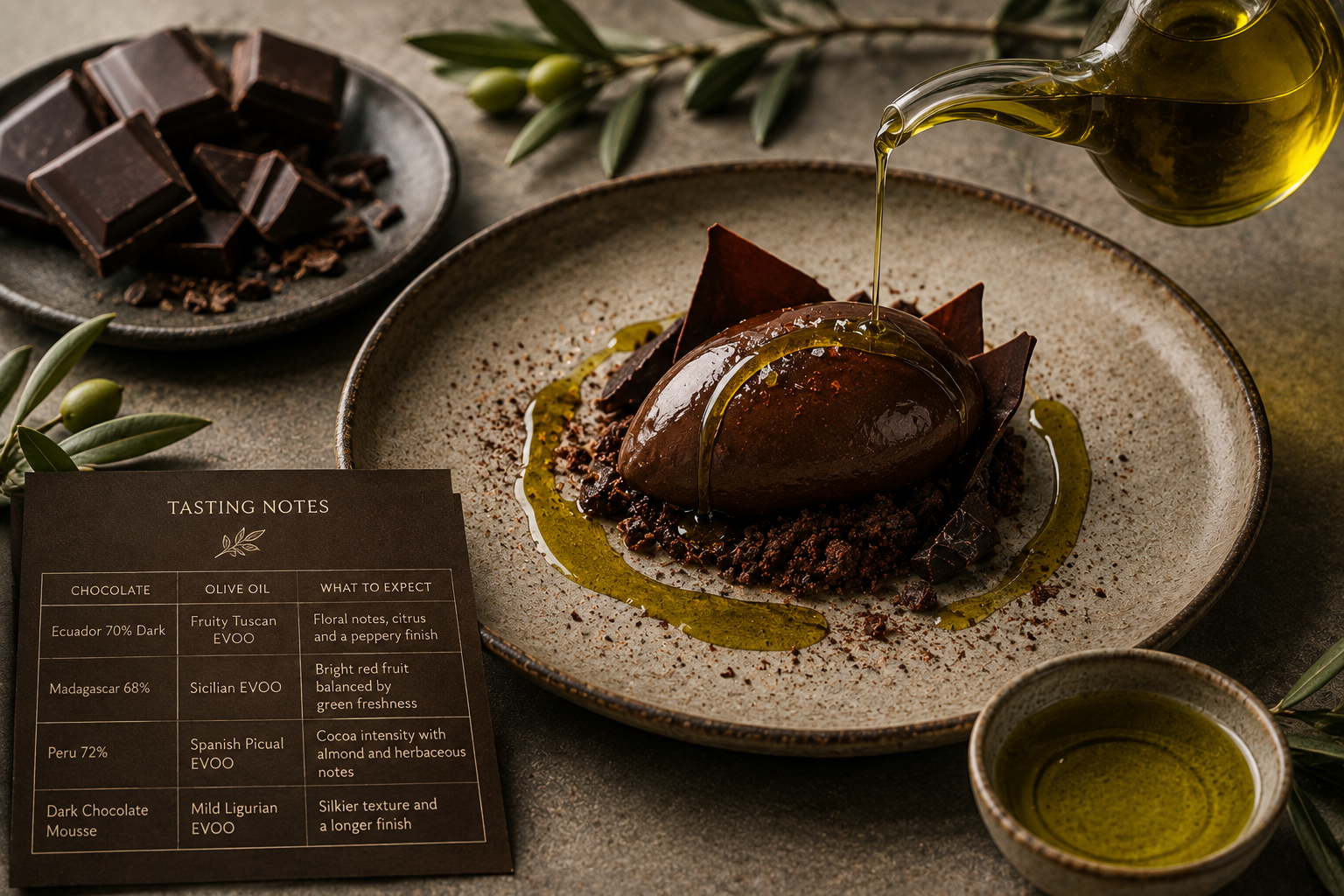
Chocolate and olive oil aren’t obvious companions.
One belongs in the pastry kitchen; the other is more at home in savoury cooking. Yet across some of Europe’s most progressive restaurants, the two are increasingly sharing the same plate, creating desserts that are richer in flavour but surprisingly lighter on the palate.
It’s a pairing that challenges expectations.
Instead of relying on butter or cream to add richness, pastry chefs are turning to high-quality extra virgin olive oil to introduce texture, freshness and aromatic complexity. A drizzle over a dark chocolate mousse, a scoop of chocolate sorbet or even a warm fondant can completely alter the tasting experience, revealing flavours that often remain hidden.
What began as an experiment in a handful of Michelin-starred kitchens has steadily found its way into contemporary pastry programmes, proving that one of chocolate’s most exciting partners isn’t another sweet ingredient at all.
Why It Works
Dark chocolate naturally contains notes of roasted nuts, dried fruit, spices and even green herbs, depending on its origin.
Extra virgin olive oil shares many of these characteristics.
A young oil can contribute aromas of fresh grass, green tomato and artichoke, while more mature oils bring softer notes of almond, ripe fruit and pepper. When paired thoughtfully, the oil amplifies chocolate’s complexity rather than masking it.
The result isn’t a dessert that tastes of olive oil.
Instead, the chocolate appears brighter, smoother and more layered.
Chefs often compare the relationship to seasoning a savoury dish. Just as a few flakes of sea salt can transform caramel, a carefully chosen olive oil can reshape the way chocolate is perceived.
From Mediterranean Tradition to Fine Dining
Olive oil has appeared in Mediterranean cakes and pastries for generations, but today’s chefs are taking the ingredient far beyond tradition.
Across France, pastry chefs are incorporating olive oil into chocolate fondants, panna cottas, ice creams and cheesecakes, while others finish plated desserts with a final drizzle of premium oil moments before serving. The approach is less about replacing butter and more about introducing a new layer of flavour and texture.
Restaurants are also experimenting with olive oil pearls, infused oils and desserts built entirely around regional olive varieties, treating olive oil with the same respect traditionally reserved for wine.
The movement reflects a broader shift in contemporary pastry—where fewer ingredients, used thoughtfully, often create greater impact.
Choosing the Right Chocolate
Not every chocolate responds in the same way.
A dark chocolate with 70–75% cocoa content provides the ideal foundation, particularly single-origin chocolates with naturally fruity or floral notes. Ecuadorian and Madagascan chocolates are especially suited to the pairing because their acidity and aromatic complexity remain vibrant alongside fresh olive oil.
Milk chocolate can work too, although chefs generally favour milder oils that won’t overwhelm its creamier character.
White chocolate is less common in this pairing, as its sweetness tends to dominate the delicate flavours of the oil.
The objective is harmony rather than contrast.
The Importance of the Oil
Just as chocolatiers choose cocoa carefully, pastry chefs are equally selective about the olive oil.
A high-quality extra virgin olive oil is essential.
Freshly pressed oils with pronounced fruitiness, gentle bitterness and a peppery finish create the greatest complexity. Heavily processed or neutral oils contribute little beyond richness.
Many chefs recommend tasting the oil on its own before pairing it with chocolate.
If it is pleasant enough to enjoy with fresh bread, it is likely to work beautifully in dessert.
A Pairing Worth Exploring
Chocolate has spent decades being paired with coffee, wine and fruit.
Olive oil offers something different.
It doesn’t compete with chocolate or add sweetness. Instead, it encourages diners to slow down, paying closer attention to texture, aroma and the subtle flavours often hidden beneath chocolate’s familiar richness.
Perhaps that’s why the pairing has found favour in some of the world’s most thoughtful pastry kitchens.
It reminds us that extraordinary desserts don’t always depend on unusual ingredients.
Sometimes, they simply depend on seeing familiar ones differently.
Tasting Notes
| Chocolate | Olive Oil | What to Expect |
| Ecuador 70% Dark | Fruity Tuscan EVOO | Floral notes, citrus and a peppery finish |
| Madagascar 68% | Sicilian EVOO | Bright red fruit balanced by green freshness |
| Peru 72% | Spanish Picual EVOO | Cocoa intensity with almond and herbaceous notes |
| Dark Chocolate Mousse | Mild Ligurian EVOO | Silkier texture and a longer finish |


Add Comment