
Walk through any major chocolate trade fair today, whether ISM Cologne, Salon du Chocolat Paris or SIGEP in Rimini, and one thing becomes immediately apparent. Conversations that once centred on flavours, festive collections and seasonal launches now revolve around a very different set of questions. How secure is your cocoa supply? Can your sourcing withstand new sustainability regulations? Are consumers willing to pay more for premium chocolate? Where should the next investment go?
The industry’s priorities have shifted.
Chocolate remains one of the world’s most loved indulgences, but behind every beautifully wrapped pralines or single-origin bar lies a business navigating rising production costs, evolving regulations and changing consumer expectations. The last three years have tested every link in the value chain—from cocoa farmers and processors to manufacturers, retailers and hospitality businesses. Those challenges have also accelerated innovation, forcing companies to rethink how they source, produce, market and sell chocolate.
For businesses willing to evolve, that disruption has opened the door to new opportunities.
Retail Moves Beyond the Supermarket Shelf
Premium chocolate is no longer competing only with other chocolate brands. It competes with luxury gifts, gourmet food, speciality coffee and even lifestyle products.
That shift is changing the way retailers approach the category.
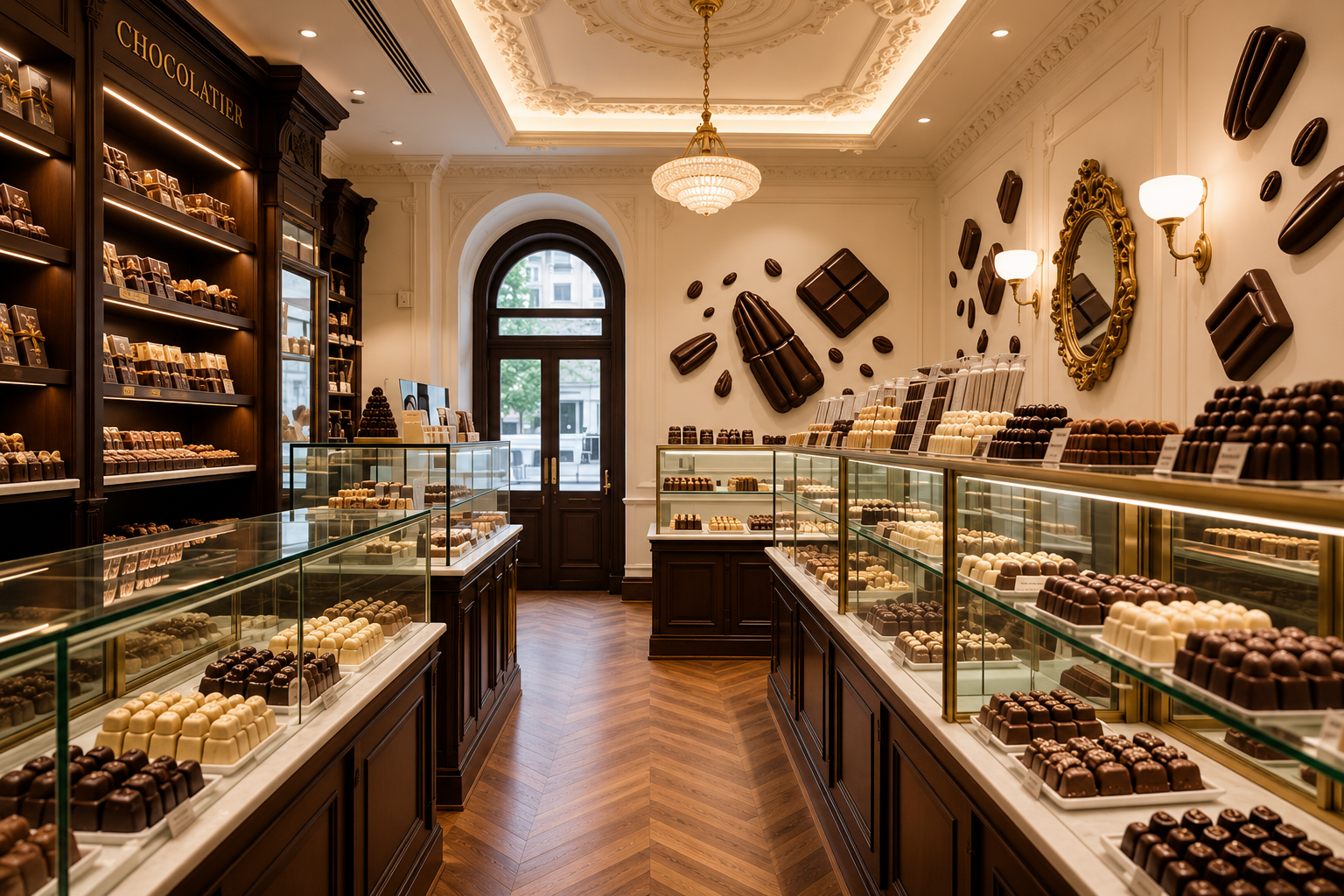
Visit Harrods in London, Lafayette Gourmet in Paris or Takashimaya in Singapore, and chocolate occupies carefully curated spaces designed to encourage exploration rather than impulse buying. Sampling stations, seasonal collections, pairing recommendations and beautifully merchandised gift displays invite consumers to spend time with the category instead of simply picking up a bar at the checkout.
The same thinking is beginning to influence retailers across India.
Independent gourmet stores, premium supermarkets and boutique cafés are expanding their chocolate selections, introducing bean-to-bar brands, single-origin collections and artisan makers alongside established international names. Consumers, particularly younger urban buyers, are showing a growing appetite for products with a clear story—whether that’s cocoa grown in Kerala, handcrafted bonbons from Bengaluru or award-winning couvertures from Europe.
For retailers, the opportunity is less about stocking more chocolate and more about presenting it differently.
Investment Finds New Opportunities
While commodity markets have experienced significant volatility, investor confidence in premium chocolate remains remarkably resilient.
Large manufacturers continue expanding their premium portfolios through acquisitions, product innovation and capacity upgrades, while independent brands are attracting investment by targeting niche consumer segments rather than competing directly with multinational players.
Craft chocolate has become one of the most interesting areas of growth.
Across Asia and the Middle East, entrepreneurs are investing in small-batch production, experiential retail and direct-to-consumer sales models. Many of these businesses operate on relatively modest volumes but generate stronger margins through quality, exclusivity and customer engagement.
India is following a similar trajectory.
The country’s bean-to-bar movement has matured considerably over the past decade. Brands sourcing cocoa from Kerala, Tamil Nadu, Karnataka and Andhra Pradesh are increasingly focusing on origin-specific chocolates that appeal to both domestic and international audiences. At the same time, investments in processing facilities, premium ingredients and specialised manufacturing equipment suggest growing confidence in the long-term potential of the sector.
Rather than chasing scale alone, many businesses are choosing to build value through differentiation.
Branding Begins Long Before the First Bite
Consumers rarely experience chocolate for the first time through taste.
Their first interaction is visual.
A carefully illustrated wrapper, textured paper, embossed logo or elegant gift box creates expectations before the chocolate is even unwrapped. In premium chocolate, branding extends well beyond advertising. It shapes perception, communicates quality and often influences purchasing decisions within seconds.
Some brands celebrate the landscapes where their cocoa is grown. Others highlight the maker, the roasting process or collaborations with chefs and artists. The objective isn’t simply to look attractive on a shelf but to create an identity consumers remember.
Storytelling has become one of the industry’s most valuable marketing tools.
A chocolate bar made using cocoa from Madagascar, Peru or India’s Idukki district carries more meaning when consumers understand its origin, the farming community behind it and the craftsmanship involved in transforming cocoa into finished chocolate.
Increasingly, the brands attracting attention aren’t necessarily those spending the most on marketing. They’re the ones telling authentic stories with consistency and confidence.
Supply Chains Are Being Rewritten
If the past few years have taught the chocolate industry anything, it’s that supply chains can no longer be taken for granted.
For decades, manufacturers relied heavily on cocoa from Côte d’Ivoire and Ghana, countries that together account for more than half of the world’s cocoa production. Poor harvests, extreme weather and crop disease exposed just how vulnerable that concentration had become. While production has shown signs of recovery in 2026, the experience has prompted companies to rethink how they manage sourcing.
The conversation has shifted from buying cocoa at the lowest possible price to building long-term resilience.
Manufacturers are strengthening relationships with producer cooperatives, investing in farmer training and diversifying sourcing wherever possible. Some are supporting regenerative farming practices, while others are introducing digital traceability systems that allow cocoa to be tracked from farm to factory.
At the same time, regulations are changing expectations. The European Union’s Deforestation Regulation (EUDR) has accelerated the adoption of traceability across the cocoa supply chain, requiring businesses supplying the European market to demonstrate that their cocoa is not linked to recent deforestation. What was once considered an added value is steadily becoming a commercial requirement.
For chocolate companies, transparency is no longer just good practice—it has become part of doing business.
Manufacturing Is Getting Smarter
Chocolate manufacturing has always been a balance of science and craftsmanship. Temperature, humidity and timing remain critical, but today’s factories rely on far more than experience alone.
Modern production lines are increasingly equipped with intelligent tempering systems, automated depositing equipment, robotic handling and digital monitoring that help manufacturers maintain consistency across every batch. Machine sensors monitor viscosity, cooling temperatures and production efficiency in real time, allowing operators to respond before small variations become costly problems.
Artificial intelligence is also beginning to influence factory operations in practical ways.
Instead of relying solely on historical sales patterns, manufacturers are using predictive analytics to forecast demand, optimise production schedules and reduce waste during seasonal peaks such as Christmas, Easter and Diwali. For businesses managing multiple product lines, these efficiencies can make a significant difference to both profitability and sustainability.
The same technology is becoming more accessible to smaller manufacturers. Equipment suppliers now offer modular systems that allow artisan producers to automate selected processes without sacrificing the handcrafted character that defines premium chocolate.
The objective isn’t to replace skilled chocolatiers. It’s to give them better tools.
Innovation Is Happening Behind the Scenes
When consumers hear the word innovation, they often think of unusual flavour combinations or limited-edition collections.
Within the industry, innovation means something much broader.
Ingredient suppliers are developing cocoa powders with improved functionality, plant-based inclusions, reduced-sugar formulations and alternative sweetening systems that help manufacturers respond to changing dietary preferences. Packaging companies are introducing recyclable materials without compromising shelf appeal, while equipment manufacturers continue improving energy efficiency and production flexibility.
Even digital technology is influencing product development.
Data gathered from online sales, loyalty programmes and consumer feedback allows brands to identify emerging preferences far more quickly than traditional market research. Seasonal collections can be developed with greater confidence, while smaller production runs allow companies to test new concepts without significant commercial risk.
Innovation today is less about creating the next novelty and more about building smarter businesses capable of adapting quickly.
India’s Opportunity Extends Beyond Consumption
India is frequently described as one of the world’s fastest-growing chocolate markets, but its opportunity extends well beyond increasing consumption.
Domestic bean-to-bar makers have earned international recognition for showcasing Indian-grown cocoa, while local manufacturers continue investing in premium products designed for modern consumers. At the same time, demand for professional chocolate-making equipment, speciality ingredients, premium packaging and technical training is expanding alongside the market itself.
Hospitality is playing an important role too.
Luxury hotels, fine-dining restaurants and independent pâtisseries are introducing more sophisticated chocolate programmes, creating opportunities for couverture suppliers, equipment manufacturers and artisan producers alike.
For international companies, India represents an attractive growth market.
For Indian businesses, it represents an opportunity to build globally respected brands rooted in local craftsmanship and ingredients.
The ecosystem is becoming stronger with every link in the value chain.
Building Businesses That Last
Every generation of the chocolate industry faces its defining challenge.
For previous generations, it was expanding production, entering new markets or scaling global distribution. Today’s challenge is different. Businesses are expected to balance commercial growth with responsible sourcing, technological investment and changing consumer expectations—all while operating in an increasingly unpredictable market.
That may sound demanding, but it is also creating room for innovation.
Companies that understand their consumers, invest in their supply chains and continue refining both their products and their business models are finding opportunities that simply didn’t exist a decade ago.
Chocolate has always been associated with craftsmanship.
In 2026, craftsmanship extends far beyond the recipe. It is reflected in how businesses source cocoa, build brands, invest in technology and earn consumer trust.
The next chapter of the chocolate industry won’t be written by the companies producing the greatest volume. It will be shaped by those creating the greatest value—for farmers, partners, retailers and consumers alike.
And perhaps that is the biggest shift of all.
The business of chocolate is no longer measured solely by what comes out of the factory. It’s measured by everything that happens before the wrapper is opened.


Add Comment