
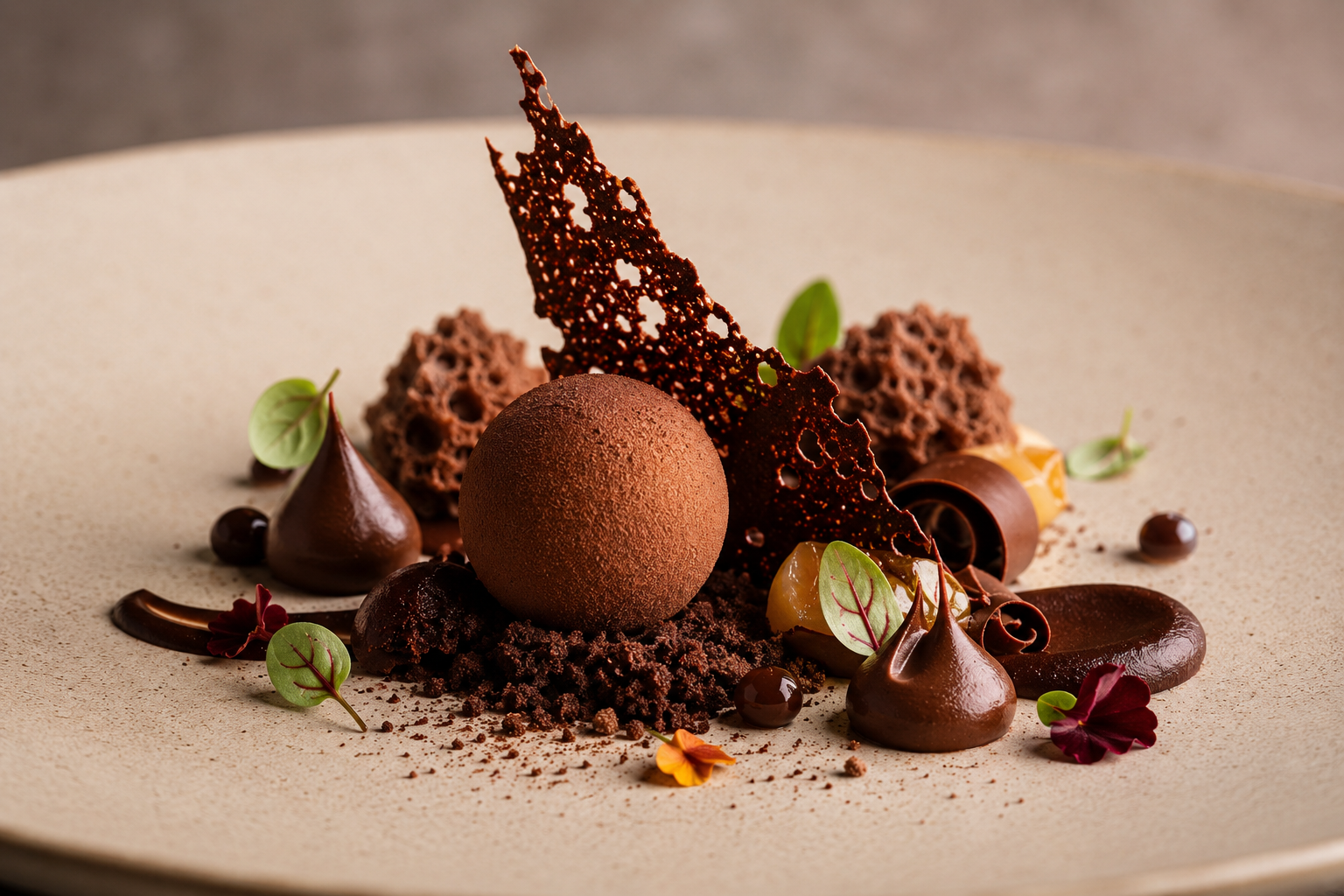
For years, chocolate desserts followed a familiar script. A molten cake, a rich mousse or a flourless torte would arrive at the end of the meal, delivering the comforting flavours diners had come to expect. They were satisfying, indulgent and unmistakably chocolate.
Walk into a contemporary restaurant today, however, and the story is remarkably different.
Chocolate no longer arrives as the obvious finale. It appears alongside smoked grains, fermented fruits, native herbs, olive oil, miso, mushrooms and even caviar. It is paired with savoury ingredients, served at unexpected temperatures and presented in ways that blur the line between dessert and contemporary art.
The change reflects a broader shift in hospitality.
Pastry is no longer the final course. It has become an extension of the restaurant’s identity.
A Dessert That Tells the Restaurant’s Story
Every memorable restaurant has a signature.
For some, it is a dish. For others, it is the atmosphere or the service. Increasingly, it is the dessert.
The world’s leading pastry chefs are creating chocolate desserts that reflect the philosophy of their kitchens rather than relying on classic recipes. At Copenhagen’s Alchemist, desserts are designed to provoke conversation. At Singapore’s Restaurant André, pastry has often drawn inspiration from nature and memory. Across Japan, minimalist chocolate desserts celebrate restraint, allowing exceptional ingredients to speak for themselves.
The result is a move away from decoration for its own sake.
Every element on the plate has a purpose.
Chocolate is chosen not because diners expect it, but because it contributes something meaningful to the story the chef wants to tell.
The Rise of Ingredient-Driven Desserts
One of the defining characteristics of contemporary pastry is restraint.
Instead of layering multiple flavours onto a single plate, chefs are allowing fewer ingredients to shine. A dessert may combine a single-origin dark chocolate with roasted fig, cultured cream and olive oil, or pair milk chocolate with buckwheat, brown butter and sea salt.
The combinations sound simple, yet each ingredient has been selected to highlight a different characteristic of the chocolate.
Acidity brightens bitterness.
Salt enhances sweetness.
Texture creates contrast.
Rather than overwhelming the palate, these desserts invite diners to slow down and notice the details.
It’s an approach that mirrors modern fine dining as a whole.
Less has become considerably more.
Hotels Are Redefining Afternoon Indulgence
Luxury hotels have also transformed the way chocolate is presented.
Afternoon tea menus, once dominated by pastries and petits fours, now feature carefully curated chocolate creations that reflect local ingredients and seasonal produce. Hotel chocolatiers are collaborating with pastry chefs to produce exclusive collections available only within the property, giving guests another reason to return.
In destinations such as Dubai, Singapore and Paris, chocolate lounges have become experiences in their own right.
Guests aren’t simply ordering dessert.
They’re exploring tasting menus built entirely around chocolate, often paired with coffee, tea or dessert wines.
For hotels, these concepts create memorable guest experiences while strengthening their culinary identity.
Cafés Become Chocolate Destinations
Independent cafés are equally important to chocolate’s evolving story.
Many now roast speciality coffee, bake artisan pastries and produce handcrafted chocolates under the same roof. Rather than treating chocolate as an additional menu item, they position it as a craft product worthy of exploration.
Single-origin hot chocolates, chocolate tasting flights and seasonal desserts have become increasingly common, particularly among cafés catering to younger consumers interested in provenance and craftsmanship.
The café has become an accessible gateway into the world of fine chocolate.
Presentation Beyond Perfection
Perhaps the biggest change in chocolate desserts has been visual.
Perfect symmetry is giving way to natural composition.
Pastry chefs increasingly plate desserts as though assembling works of art, using negative space, organic shapes and subtle colour palettes to create movement across the plate.
The objective isn’t simply to impress.
It’s to create curiosity.
A guest should want to ask questions before taking the first bite.
That sense of discovery has become just as valuable as technical precision.
A More Thoughtful Finale
Chocolate remains one of the most comforting ingredients in the pastry kitchen, but comfort no longer means predictability.
Restaurants, cafés and hotels are embracing regional ingredients, seasonal produce and contemporary techniques to create desserts that feel personal rather than familiar. The emphasis has shifted from richness to balance, from decoration to intention, and from spectacle to storytelling.
For diners, this makes the final course far more memorable.
For chefs, it offers endless possibilities.
Because the most exciting chocolate desserts being served today aren’t simply about satisfying a sweet tooth.
They’re about leaving guests with one final reason to remember the meal long after the last spoonful has disappeared.


Add Comment