
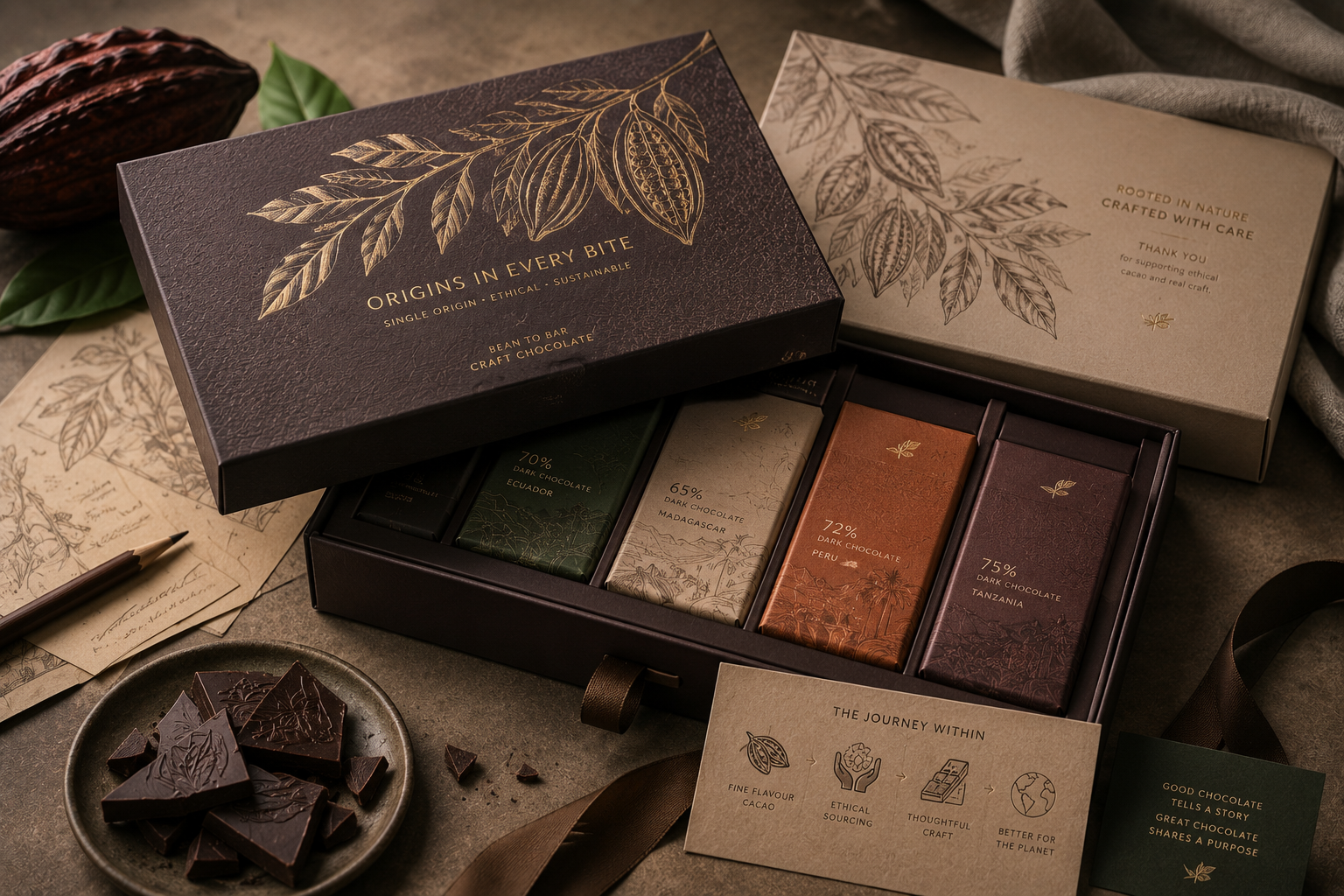
A beautifully crafted chocolate deserves beautiful packaging. That much has always been true. What’s changed is the role packaging now plays in the business of chocolate.
For premium brands, the box has become an extension of the product itself. It introduces the maker, reflects the quality within, explains the origin of the cocoa and communicates the personality of the brand long before the first piece is tasted. Consumers aren’t simply buying chocolate anymore—they’re buying a story, an experience and increasingly, a set of values.
This shift is influencing every aspect of packaging design, from materials and typography to colour palettes, structural design and sustainability. In an increasingly crowded marketplace, where consumers are spoilt for choice, thoughtful packaging has become one of the strongest competitive advantages a brand can have.
First Impressions Are Made on the Shelf
Whether in a luxury department store in Dubai, a gourmet supermarket in Singapore or an artisanal café in Bengaluru, premium chocolate competes for attention within seconds.
Designers understand this well.
The visual identity of a chocolate brand often determines whether a consumer picks up the product in the first place. Colour, texture, illustration, typography and finishing techniques work together to create an immediate impression. Minimalist designs often signal sophistication, while bold illustrations and vibrant colours suggest creativity and adventure. Neither approach is right or wrong; what matters is consistency.
Walk through any premium chocolate aisle today and the diversity is striking. One brand may use understated cream-coloured paper with embossed lettering to communicate refinement. Another may celebrate its cacao origin through intricate illustrations inspired by local culture. A third may embrace contemporary graphic design to appeal to younger consumers.
Each package tells a different story before the chocolate has even been unwrapped.
Packaging Has Become Brand Identity
Ask consumers why they remember a particular chocolate brand and many will describe the packaging before they mention the flavour.
Some brands have built instant recognition through distinctive visual identities that remain consistent across every product line. Others adapt their packaging seasonally while retaining key design elements that make the brand instantly recognisable.
This consistency has become increasingly important as chocolate brands expand across physical retail, e-commerce and social media.
Packaging is now photographed, shared online and featured in gifting moments. A beautifully designed chocolate box is no longer seen only on store shelves—it appears on Instagram feeds, unboxing videos and festive gift tables.
Good branding ensures that wherever consumers encounter the product, they recognise it immediately.
The strongest brands understand that every design choice contributes to that recognition.
Sustainability Is Influencing Design Decisions
Few conversations have shaped packaging more than sustainability.
Consumers are asking difficult questions about plastic usage, recyclability and environmental impact. Retailers are placing greater emphasis on responsible packaging, while governments around the world continue introducing policies aimed at reducing packaging waste and encouraging circular economy practices.
For chocolate brands, this has encouraged a noticeable shift towards recyclable paper, responsibly sourced board, compostable films and reduced plastic components.
Minimal packaging is also becoming more common, particularly among craft chocolate makers who often choose simple paper wraps, natural finishes and soy-based inks over elaborate decorative elements.
Sustainability, however, extends beyond materials alone.
Brands are reconsidering pack sizes, transport efficiency and manufacturing processes to reduce their overall environmental footprint.
Consumers increasingly appreciate these efforts—provided they are genuine.
Empty environmental claims are quickly recognised.
Clear communication and measurable action carry far greater value.
The Rise of Thoughtful Storytelling
Chocolate has always had stories worth telling.
The cacao may come from a single estate in Ecuador. The recipe may have been inspired by a family tradition. A chocolatier may work directly with farming communities or collaborate with local artists.
Packaging has become the ideal place to tell those stories.
Instead of filling every available space with marketing language, many premium brands are choosing concise, authentic narratives that create an emotional connection with consumers.
Maps showing cacao origins, illustrations of farming communities, tasting notes, harvest information and maker profiles all help consumers understand what makes one chocolate different from another.
This approach reflects a broader change in consumer behaviour.
People increasingly want to know who made their food, where ingredients were sourced and what values the company represents.
Packaging has become the bridge between producer and consumer.
Designing for the Gift Market
Few food categories are purchased as gifts as frequently as chocolate.
This makes structural packaging almost as important as graphic design.
Magnetic closure boxes, rigid gift cartons, drawer-style packaging and reusable tins continue to gain popularity because they create a sense of occasion. The experience of opening premium chocolate has become carefully choreographed, with every layer adding anticipation.
Luxury brands understand that gifting extends the life of the package itself.
Many consumers keep beautifully designed chocolate boxes long after the chocolates have been enjoyed, giving the brand a lasting presence in their homes.
This is particularly relevant in markets such as India and the Middle East, where festive celebrations, weddings and corporate gifting remain significant drivers of premium chocolate sales.
For these occasions, packaging often becomes part of the gift rather than simply containing it.
Technology Meets Packaging
Digital innovation is quietly reshaping packaging too.
QR codes now offer far more than promotional campaigns. Consumers can scan a package to learn about cacao origins, discover tasting notes, verify sustainability credentials or even meet the people behind the product.
Some brands are experimenting with digital product passports that provide detailed information about sourcing, manufacturing and environmental impact. Others use augmented reality to create interactive experiences that bring illustrations and stories to life through smartphones.
For manufacturers, smart packaging also supports inventory management, authentication and traceability throughout the supply chain.
Technology is making packaging more informative without compromising its visual appeal.
Finding the Right Balance
The most successful chocolate packaging rarely tries to say everything.
It communicates only what matters.
A strong visual identity, carefully selected materials and an authentic brand story often have greater impact than excessive decoration or marketing jargon.
As competition within the premium chocolate sector continues to grow, brands are recognising that packaging should not simply attract attention—it should create trust.
Consumers remember products that feel considered.
They notice thoughtful details, quality finishes and stories that feel genuine rather than manufactured.
In the end, great packaging does something remarkably simple.
It gives consumers a reason to believe that the chocolate inside will be every bit as memorable as the box that brought it home.


Add Comment