
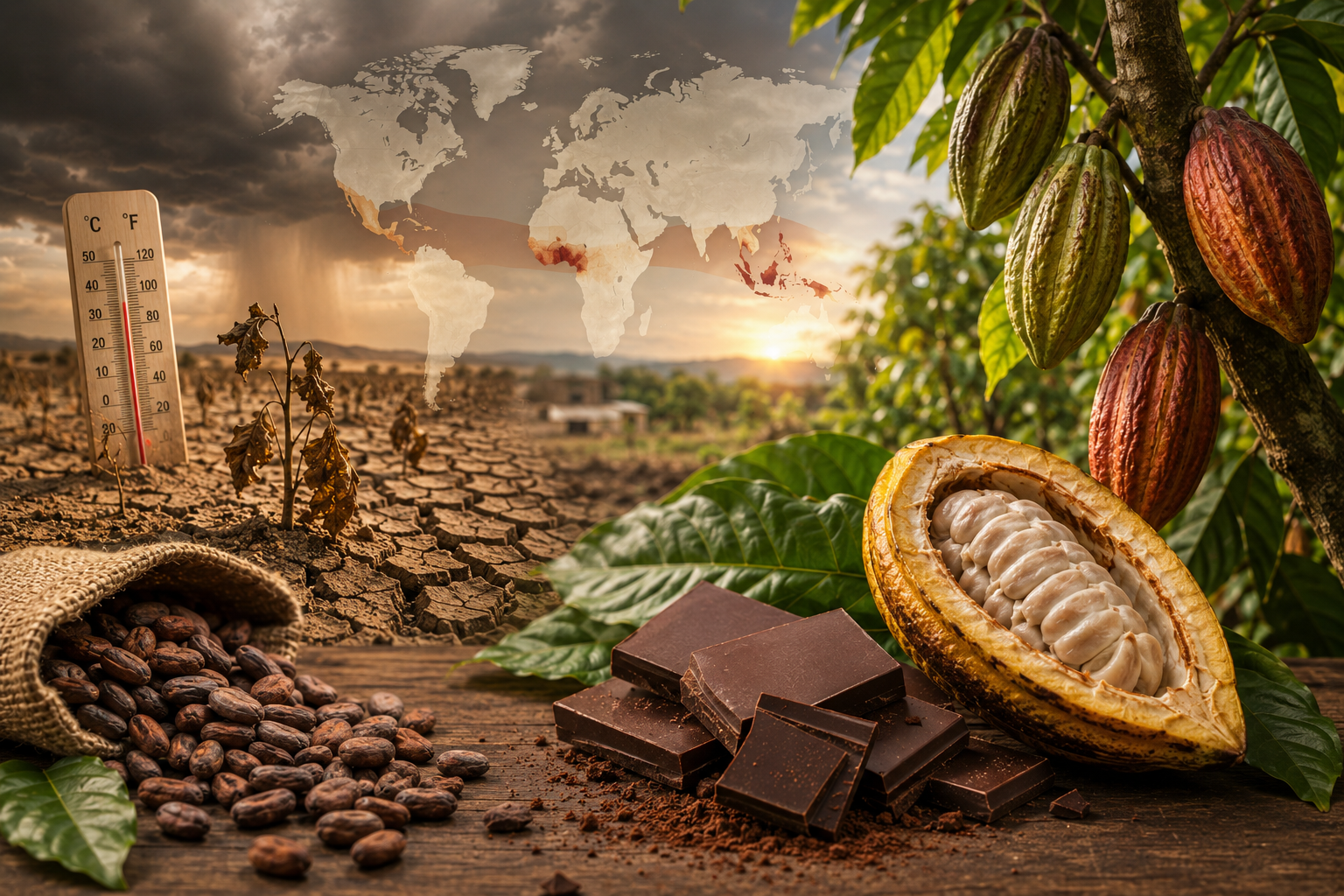
For centuries, chocolate has been defined by craftsmanship. Chocolatiers perfected recipes, pastry chefs elevated desserts, and brands built legacies around flavour, texture and innovation. Yet today, the future of chocolate is being shaped far from the factory floor or the pastry kitchen. It begins in cocoa-growing regions where rising temperatures, unpredictable rainfall and changing weather patterns are challenging one of the world’s most delicate crops.
Climate change has become one of the defining issues facing the global chocolate industry. Once considered a distant environmental concern, it now influences every stage of the value chain—from cocoa farms and commodity markets to manufacturing costs and retail pricing.
For consumers, it may mean paying more for a favourite chocolate bar. For producers, however, it is about safeguarding an industry that supports millions of livelihoods and supplies one of the world’s most loved ingredients.
As India’s premium chocolate market gathers momentum, these global challenges are becoming increasingly relevant at home.
When the Climate Changes, Cocoa Responds
Unlike many commercial crops, cocoa thrives only within a narrow band around the equator. It requires consistent rainfall, warm temperatures, high humidity and healthy, nutrient-rich soil. Even minor shifts in climate can affect flowering, pod development and bean quality.
Over the past few years, cocoa-producing regions have experienced increasingly erratic weather. Extended dry spells have been followed by intense rainfall, while rising temperatures have placed additional stress on cocoa trees. Farmers have also reported a greater incidence of pests and diseases, further reducing productivity.
The consequences extend beyond individual harvests.
Poor yields tighten global supplies, increase cocoa prices and create uncertainty throughout the chocolate supply chain. For manufacturers, ingredient costs become more volatile. For retailers, maintaining competitive pricing becomes more difficult. Ultimately, the impact reaches consumers.
The conversation surrounding chocolate is no longer centred solely on flavour.
It is increasingly about resilience.
West Africa at the Centre of the Story
Côte d’Ivoire and Ghana remain the backbone of the global cocoa industry, producing more than half of the world’s cocoa beans. Millions of smallholder farmers across these two countries depend on cocoa cultivation as their primary source of income.
When weather patterns change in West Africa, the effects are felt worldwide.
Recent seasons have highlighted the vulnerability of the region’s cocoa production, prompting manufacturers and governments to rethink how cocoa should be grown in an era of climate uncertainty.
The response is not simply about increasing production.
It is about producing cocoa more sustainably while protecting the farmers who make the industry possible.
Across many farming communities, traditional knowledge is now being combined with modern agricultural practices to improve resilience without compromising quality.
Farming for the Future
Climate adaptation begins on the farm.
One of the most significant developments has been the growing adoption of agroforestry, where cocoa is cultivated alongside native shade trees instead of in exposed monoculture plantations.
Shade trees help regulate temperature, improve soil moisture, reduce erosion and encourage biodiversity, creating healthier ecosystems that support long-term cocoa production.
Farmers are also introducing improved irrigation techniques, composting systems and soil regeneration practices that strengthen cocoa trees against periods of drought or excessive rainfall.
Equally important is post-harvest management.
Careful fermentation and drying remain essential for producing high-quality cocoa, but changing weather conditions have encouraged farmers to adopt improved drying infrastructure that protects beans during unpredictable rain.
For many growers, adapting to climate change is no longer optional.
It has become part of everyday farming.
Technology Is Supporting Tradition
While cocoa farming remains deeply rooted in tradition, technology is beginning to play an important role in helping farmers make better decisions.
Satellite monitoring, weather forecasting tools and mobile-based advisory services are giving producers access to information that was previously difficult to obtain. Farmers can now receive alerts about changing weather conditions, disease outbreaks and recommended farming practices directly on their mobile phones.
Research institutions are also developing cocoa varieties that are more resilient to heat, drought and disease while preserving the flavour characteristics valued by premium chocolate makers.
Technology alone cannot solve climate challenges, but when combined with local farming knowledge, it offers practical tools for protecting future harvests.
India’s Growing Role
Although India contributes a relatively small share of global cocoa production, its chocolate industry is evolving rapidly.
Premium bean-to-bar brands, artisan chocolatiers and speciality dessert businesses have created renewed interest in Indian-grown cocoa, particularly from Kerala, Karnataka, Tamil Nadu and Andhra Pradesh.
Over the past decade, Indian chocolate makers have worked closely with farmers to improve fermentation, drying and quality standards, allowing domestic cocoa to gain greater recognition among premium manufacturers.
As climate patterns become increasingly unpredictable, Indian producers are paying closer attention to sustainable farming methods, water management and crop diversification.
The opportunity is significant.
With consumer demand for premium chocolate continuing to grow, India has the potential to strengthen not only its manufacturing capabilities but also its cocoa supply chain through investment in climate-smart agriculture.
For Indian brands, supporting farmers is no longer simply a sustainability initiative.
It is becoming a long-term business strategy.
The Business of Sustainability
Climate resilience is changing the way chocolate companies think about sourcing.
Rather than purchasing cocoa through short-term transactions, many premium brands are building long-term partnerships with farming communities, investing in training, education and better agricultural practices.
Responsible sourcing now extends beyond certification.
Companies are supporting reforestation projects, improving farmer incomes and encouraging agricultural methods that protect both productivity and biodiversity.
Consumers are increasingly rewarding these efforts.
Origin stories, traceability and transparent sourcing have become important purchasing considerations, particularly within the premium chocolate category.
People want to know not only where their chocolate comes from, but also how it was produced.
A Shared Responsibility
Climate change is often described as the greatest challenge facing agriculture.
For chocolate, it may also become its greatest opportunity for collaboration.
Farmers, researchers, manufacturers, retailers and consumers all have a role to play in protecting the future of cocoa. Whether through investing in sustainable farming, supporting responsible sourcing or choosing chocolate from brands committed to long-term partnerships, every decision contributes to a more resilient supply chain.
The chocolate industry has always adapted to changing tastes and consumer expectations.
Now, it must adapt to a changing planet.
Chocolate has survived changing markets, economic uncertainty and evolving consumer trends because it has continually reinvented itself.
The challenge today is different.
Protecting the future of chocolate begins long before beans reach a roasting drum or a chocolatier’s workshop. It starts in cocoa-growing communities where farmers are learning to work with an increasingly unpredictable climate while preserving the quality that defines exceptional chocolate.
For India, the journey is only beginning.
As the country’s premium chocolate sector expands and its cocoa industry continues to mature, climate resilience will become just as important as craftsmanship and innovation.
The future of chocolate will not be determined solely by the recipes we create.
It will depend on how well we protect the landscapes, the communities and the farmers who make every bar of chocolate possible.


Add Comment