
For years, chocolate has occupied two opposing worlds.
It has been celebrated as a luxurious indulgence while simultaneously carrying the guilt often associated with sugar and confectionery. Consumers loved it, but many believed it belonged firmly in the category of occasional treats rather than everyday wellbeing.
That perception is beginning to change.
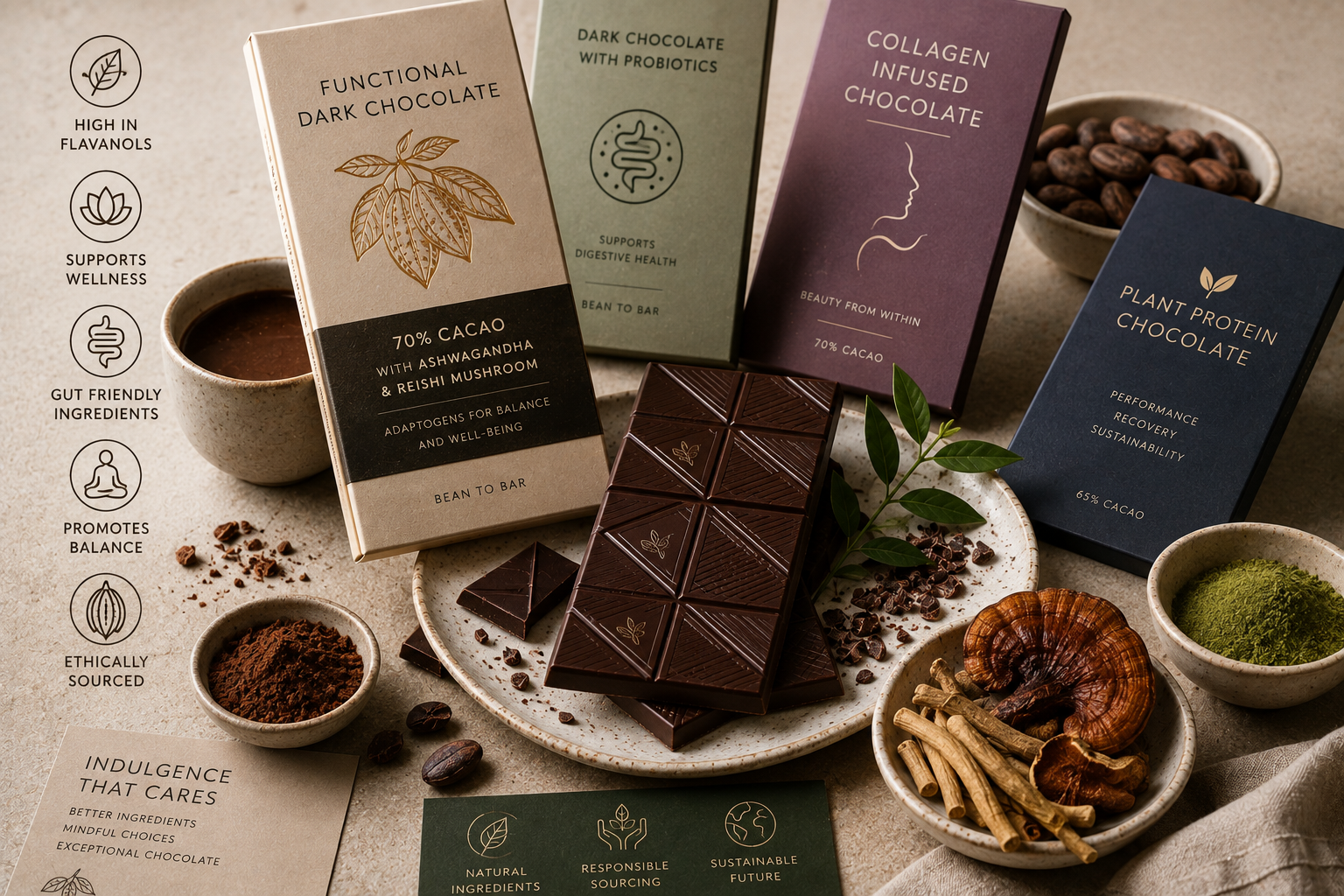
Walk through the aisles of a premium food retailer or browse the latest collections from artisan chocolate makers, and a different picture emerges. Alongside single-origin bars and handcrafted pralines are chocolates enriched with botanicals, functional mushrooms, probiotics, collagen, protein and adaptogenic herbs. Wellness, once dominated by powders and supplements, is quietly making room for chocolate.
The message isn’t that chocolate has suddenly become a health food.
It’s that consumers are looking for products that allow indulgence and wellbeing to coexist.
A New Definition of Indulgence
The premium chocolate market has evolved alongside changing consumer lifestyles.
People are becoming more selective about what they eat. Rather than eliminating treats altogether, many are choosing products made with higher-quality ingredients, shorter ingredient lists and greater transparency.
This shift has encouraged manufacturers to rethink product development.
Instead of simply reducing sugar, brands are exploring ingredients that add nutritional value while preserving flavour and texture. Dark chocolate remains the preferred base, thanks to its naturally high cocoa content and rich flavour profile, making it an ideal canvas for functional ingredients.
The result is chocolate that feels less like a compromise and more like a considered choice.
When Chocolate Meets Functionality
One of the most noticeable developments in recent years has been the rise of functional chocolate.
These products go beyond traditional recipes by incorporating ingredients associated with specific lifestyle goals, whether supporting digestion, relaxation, focus or recovery.
Adaptogens such as ashwagandha and reishi mushroom are appearing in premium chocolate bars designed to help consumers manage stress. Probiotic cultures are being added to products aimed at supporting gut health, while collagen-infused chocolates appeal to consumers interested in beauty and healthy ageing.
Plant proteins, seeds and fibre-rich ingredients are also finding their place in premium formulations, particularly among brands targeting active lifestyles.
Importantly, these additions are no longer positioned as novelty ingredients.
They are becoming part of a broader movement towards foods that offer both enjoyment and purpose.
The Cocoa Advantage
Despite the attention given to added ingredients, cocoa itself remains one of the most valuable components.
Natural cocoa is rich in flavanols—plant compounds that have attracted considerable scientific interest for their potential role in supporting cardiovascular health, blood circulation and cognitive function. While research continues to evolve, flavanol-rich cocoa has become one of the reasons premium dark chocolate is increasingly viewed differently from conventional confectionery.
The key, however, lies in moderation and quality.
Higher cocoa content generally provides greater concentrations of these naturally occurring compounds while containing less sugar than traditional milk chocolate products.
For many consumers, choosing chocolate with 70 per cent cocoa or higher has become less about intensity and more about appreciating cocoa in its purest form.
Clean Labels, Clear Choices
Consumers today are reading ingredient lists with greater attention than ever before.
Artificial colours, excessive additives and unfamiliar preservatives are steadily giving way to simpler formulations built around recognisable ingredients.
Chocolate makers are responding by reducing unnecessary complexity.
Single-origin cocoa, unrefined sugars, natural flavourings and responsibly sourced inclusions are becoming increasingly common, particularly within the premium segment. Packaging reflects this shift too, with brands choosing understated designs that communicate authenticity rather than excess.
For consumers, wellness begins long before the first bite.
It begins with trust.
Wellness Is Becoming Personal
Perhaps the most significant change is not the ingredients themselves but the way people approach indulgence.
Consumers are moving away from restrictive food habits and towards mindful eating. Instead of avoiding chocolate altogether, they are choosing smaller portions of better-quality products and taking time to appreciate flavour, texture and craftsmanship.
This philosophy aligns naturally with premium chocolate.
A carefully made single-origin bar offers an experience that encourages slower consumption, inviting people to notice tasting notes, aroma and texture rather than simply satisfying a craving.
The emphasis has shifted from quantity to quality.
Innovation with Integrity
For manufacturers, the rise of functional chocolate presents exciting opportunities, but also important responsibilities.
Consumers are becoming more informed and increasingly sceptical of exaggerated wellness claims. They expect products to deliver genuine quality rather than relying on fashionable ingredients or marketing language.
Successful brands understand this balance.
They recognise that chocolate should remain enjoyable first and functional second.
The finest examples don’t overwhelm consumers with promises.
Instead, they combine exceptional cocoa with thoughtfully selected ingredients that complement both flavour and lifestyle.
A More Thoughtful Future
Chocolate has always been associated with celebration, comfort and pleasure.
Those qualities remain unchanged.
What is changing is the way people choose to enjoy it.
The next generation of chocolate isn’t trying to replace indulgence with wellness. It is bringing the two closer together, allowing consumers to enjoy exceptional craftsmanship while making more conscious choices about the food they eat.
Perhaps that is the most significant transformation of all.
Chocolate doesn’t need to become something different to earn a place in a healthier lifestyle.
It simply needs to be made—and enjoyed—with greater intention.


Add Comment